
Twinkle, Twinkle Little Star
🎯 What You’ll Learn
In this lesson, you’ll learn how to play “Twinkle, Twinkle Little Star” on the fiddle using a fun, step-by-step approach. We’ll start by plucking the notes so you can focus on learning the melody and left-hand fingering. Then we’ll build confidence through call-and-response, singing, and repetition.
By the end, you’ll not only have the tune under your fingers—you might even catch your cat humming along. (If not, keep practicing. She’ll come around.)
🛠 Key Tips
- Start by plucking the strings instead of bowing to keep things simple.
- Sing or hum each phrase before playing—it locks the melody in your mind.
- Loop each line until it feels natural before moving on.
- Use call-and-response to learn by ear before checking the tabs.
- The tune follows an A/B/A pattern—practice each section separately, then link them up.
❓ Common Questions
Do I need to read sheet music for this?
Nope! You’ll learn this one by ear using call-and-response and tab.
Why start with plucking?
Plucking removes the pressure of bowing so you can focus on notes and pitch.
What if I can’t sing?
Try humming or even whistling—your fiddle won’t judge.
Twinkle Twinkle Little Star Call-And-Response Lesson
Learn the tune through old-school call-and-response. I’ll play something, then leave you a space to play it back.
Use these lessons to learn, improve or review the tune.
[convertkit form=4973196]
Learning Chunks™
Preparation
If you review what you did yesterday you can take another step today.
As usual, start by bowing on open strings with a nice sound.
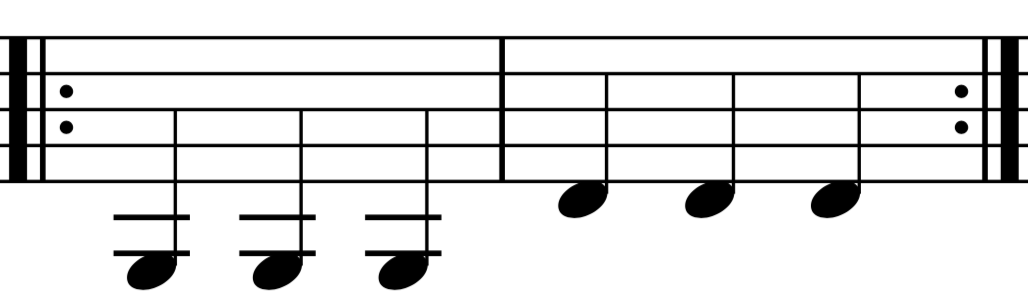
Triplets G to D
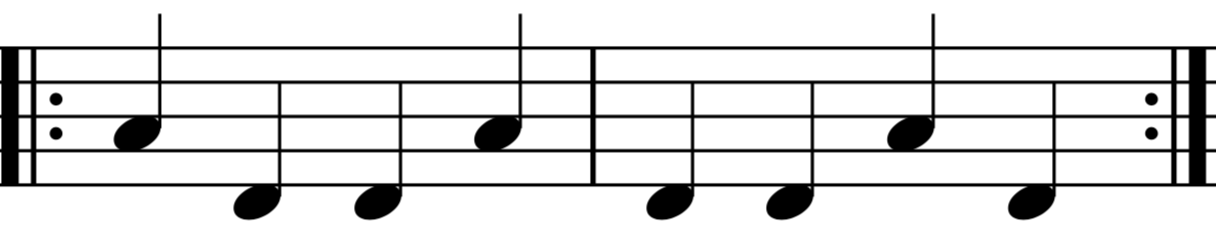
Skedaddle A to D
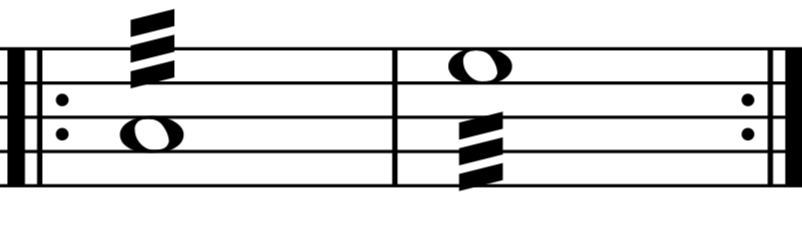
Tremolo bow A to E
Next, warm up the left hand. Play different rhythms. Pause to listen to the drone note.
D1 with an E drone
D2 with an F# drone
D3 with a G drone
D0-1-2-3-3-2-1-0
Let’s now practice fingering on the A string. The first finger on the A string is called B:
A1 with a B drone
A0-0-1-1
A part, first half
Intervals:
D0-A0
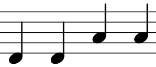
A0-0-1-1
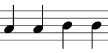
First half: D0-0-A0-0 | A1-1-0
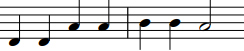
One of the most powerful practices you can to as a fiddler is to sing what you play. Sing “Twinkle twinkle little star,” then play it on the fiddle. Keep alternating in this way.
A part, second half
B part
Full Tabs, Audio & Sheet Music
Try to sing, whistle or hum the melody before you learn it on fiddle. I recommend you learn it with plucking (pizzicato) before using the bow. This tends to make it easier.
Notice that the form of the tune is A/B/A and that the B part is the same exact line played twice. So to do the whole song, we just play the A part, the B part and then the A part again.
A part
First half: D0-0-A0-0-1-1-0
Second half: D3-3-2-2-1-1-0
B part
First half: A0-0-D3-3-2-2-1
Second half: A0-0-D3-3-2-2-1
Full mix
Low fiddle mix
Sheet music
Sign up for a Trial Subscription to access all audio, sheet music, tabs and other learning content.Sheet music video
Learn to intuitively read sheet music with this animated video. If you’re an absolute beginner, then I suggest you don’t worry about fo it for the moment.
This is here for continuing students who want to learn about sheet music. It’s part of the Note-Reading For Fiddlers course.
This tune is in the key of D so we can practice it with a D drone. Use the drone to slowly work on each part. Then use the play-along loops to further master each part.
Drone in D
Now, take at least five minutes to practice this on your own. In the next lesson, we’ll learn how to add fiddle variation to this melody.
Continue to Fiddle Fiddle Little Star >>
Return to top of Module 1.1 >>
Leave a Reply
You must be logged in to post a comment.
Lots of information here – I’m not a beginner but I’m starting at ground zero as a refresher. No posts here for quite some time!
As a teacher myself, I’m really impressed with this whole course. It really is excellent.
is there a way to get past 89% ? I finished reflections and fiddle fiddle little star, but stays at 89
Hi Jason – I am maybe an advanced beginner and now sticking with easy tunes as I do some of the note reading course. Question – on the sheet music, why are there letters over notes that are not actually the note letters? For example in the second bar of Twinkle there is a G over the note that is an E and a D over the note that is an A. Next bar the D is over the F and an A is over an F. So confusing!
These letters are for guitar and piano chords in case anyone would like to play along! Sorry for the confusion, there is a small note in the description, but we can enlarge that! Thanks for the heads up, and keep practicing!
I wondered same…
I’m lucky, I’m retired and can practice as much as I want. I normally practice 4-5 times a day, usually 5minutes on the key of the song.
Forwards and backwards. Then work on the suggested parts.